
Nonviolent Communication

NVC and Living Compassion

NVC, Nonviolent Communication, is a method for creating and sustaining connection. Living Compassion carries it deep into inner, embodied experience.

What living connection is

Foundation

What NVC is

NVC (Nonviolent Communication) is a method for creating and sustaining connection. It can be used to help resolve conflicts and to increase mutual understanding and trust — for instance in communities, workplaces, families, and relationships. With it, heartfelt goodwill can have more space to flourish in every relationship, including the very closest one: the relationship with oneself.

A way of being

More than a communication method

Despite its name, however, NVC is much more than a communication method. It is a way of being in the world, of becoming aware, of understanding and experiencing. One could also say that at its core it is a state of being, something entirely natural, for NVC's central assumption is that the core of a human being is compassionate. The purpose of the NVC tools is to help us connect with our gentle, empathic innermost self.

The four components of NVC

Observation · Feeling · Need · Request

1

Observation

Observation seeks to describe what is really happening. We tend to add our own interpretations, labels and judgments to events. “He is always so selfish. Once again, he had no interest in what anyone else thought and just went on about his own concerns.” What actually happened? “We were in the kitchen in the evening. He talked about something that had happened during the day. He did not ask how I was.” In NVC, an observation is often described as what a camera would record.
2

Feeling

Here we connect with the feelings that are alive in us in relation to what happened. We try to be present with our inner experience as openly and honestly as possible. When we are with another person, we also listen to their feelings — and sometimes we may make a guess, silently or aloud, if they do not recognise those feelings or cannot put them into words.

When practising NVC, we often use a feelings list to help us find the words: “Relieved, nervous, inconsolable, confused, exhausted…” We also learn to distinguish feelings from thoughts. A sentence beginning “I feel that…” usually expresses a thought rather than a feeling. We need to make room for our inner experience so that we can first feel what we feel, and then share it with others.

3

Need

In NVC, needs are understood as universal basic needs shared by all human beings. As with feelings, a list of needs can help us recognise what is alive in us. What am I really longing for now? We can begin to recognise the difference between a need and a strategy. Our underlying need might be creativity, and there are many ways to meet it. If one strategy is not possible now, we may find another way to meet the need. Different strategies work for different people, while the needs are shared.

4

Request

Once we have recognised and expressed our feelings and needs, what could we ask of ourselves or another person that would enrich our lives? An NVC request is positive, concrete and clear. It is neither a demand nor an order, but a sincere wish to which the other person is free to say no. NVC is nonviolent — so we do not want to force the other person. In fact, we want them to say yes only if they can do so with joy. If they say no, we can continue the conversation, looking for a solution that meets both people's needs.

Living Compassion

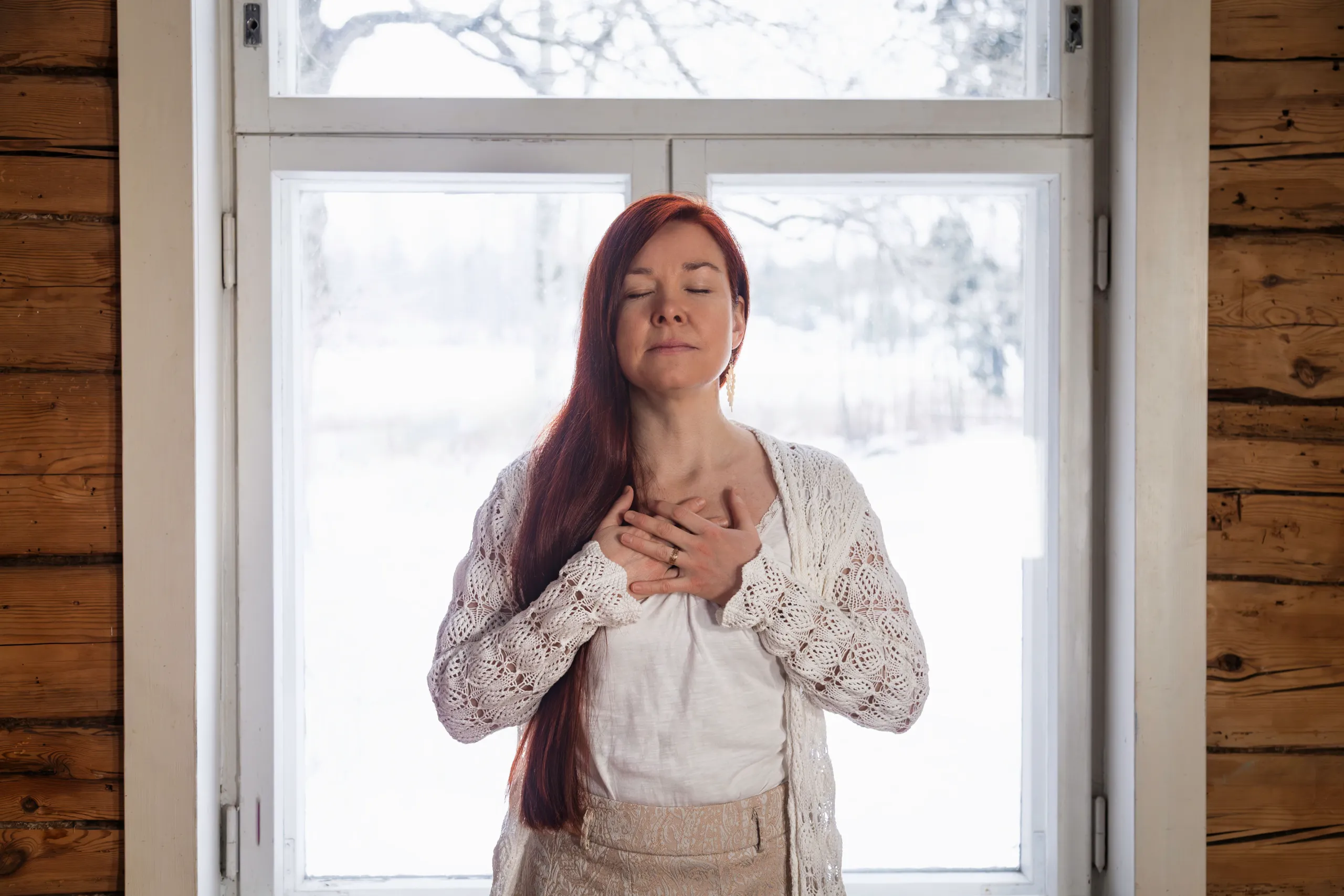
Deep into inner experience

Rosenberg's friend and colleague, NVC teacher Robert Gonzales, brought elements of NVC into his own work, which he called Living Compassion.

We are still working with feelings and needs, but in a deeply felt and living way. The process unfolds naturally from within, moved by the energy of life rather than primarily by thinking and reflection.